Skip to production management
BEHINDTHE SHOWLive Production,
Explained.

Production Expertise / Behind The Show

Production Management
for Live Events

A successful production is not simply a collection of suppliers.

Sound, video, lighting, staging, backline, venue operations, artists, content, schedules and logistics have to work as one production.

I work with clients, agencies, venues and production teams to help turn an event brief into an executable production plan and, where required, manage that plan through to the show.

Vinay Sharma is available for selected production consultation and production-management engagements.

Scope and responsibilities are agreed for each production.
01The Role

Someone still needs to see the whole production

Individual suppliers may be responsible for their systems. The venue may control access, rigging and working hours. Artists may bring technical riders. The client or agency may control the programme, content and approvals.

Production management connects those interfaces.

Depending on the agreed scope, the role may include understanding the brief, defining production requirements, coordinating suppliers, resolving venue and artist requirements, developing the production schedule and managing technical delivery on site.

It does not mean one person performs every specialist technical role. Engineers, designers, operators, riggers, venue teams and other qualified specialists remain responsible for their work.

02When Experienced Oversight Helps

Production management may be useful when…

  • several technical suppliers need coordination;
  • the venue has complex access, working or technical rules;
  • artists and technical riders are involved;
  • several rooms or stages operate as one event;
  • rehearsals and show timings are tightly constrained;
  • remote participants, streaming or recording are critical;
  • responsibilities between the client, agency, venue and suppliers are unclear;
  • the client does not have an internal technical production lead;
  • the consequence of a technical or operational failure is significant.

The question is not simply whether the event is large. It is whether someone already owns the complete production picture.

03Engagement modes

Review Plan Manage

Review

Need an experienced production review or second opinion?

You may already have a venue, supplier proposal, technical rider or draft schedule and want experienced production input before committing.

  • event brief review;
  • supplier scope or quotation review;
  • venue technical review;
  • technical rider review;
  • production schedule review;
  • identification of gaps, exclusions and assumptions.

You remain responsible for managing the production. The engagement provides review, analysis and practical production perspective.
Plan

Turn the event brief into an executable plan

Planning begins with what is happening, not with a predetermined equipment list.

  • clarifying production requirements;
  • developing supplier briefs and production scope;
  • coordinating venue and artist information;
  • mapping responsibilities;
  • building production, rehearsal and show schedules;
  • managing dependencies, approvals and open questions;
  • production advance before the event reaches the venue.
Manage

Need someone to coordinate the whole production picture?

Production management adds active involvement through planning and delivery.

  • technical and supplier coordination;
  • venue interface;
  • artist and rider advance;
  • schedule and crew coordination;
  • load-in and setup coordination;
  • rehearsals and soundchecks;
  • technical/show-day coordination;
  • strike and load-out oversight;
  • post-event production review.

Actual authority, responsibilities and exclusions are agreed for each engagement.

04Production Coordination
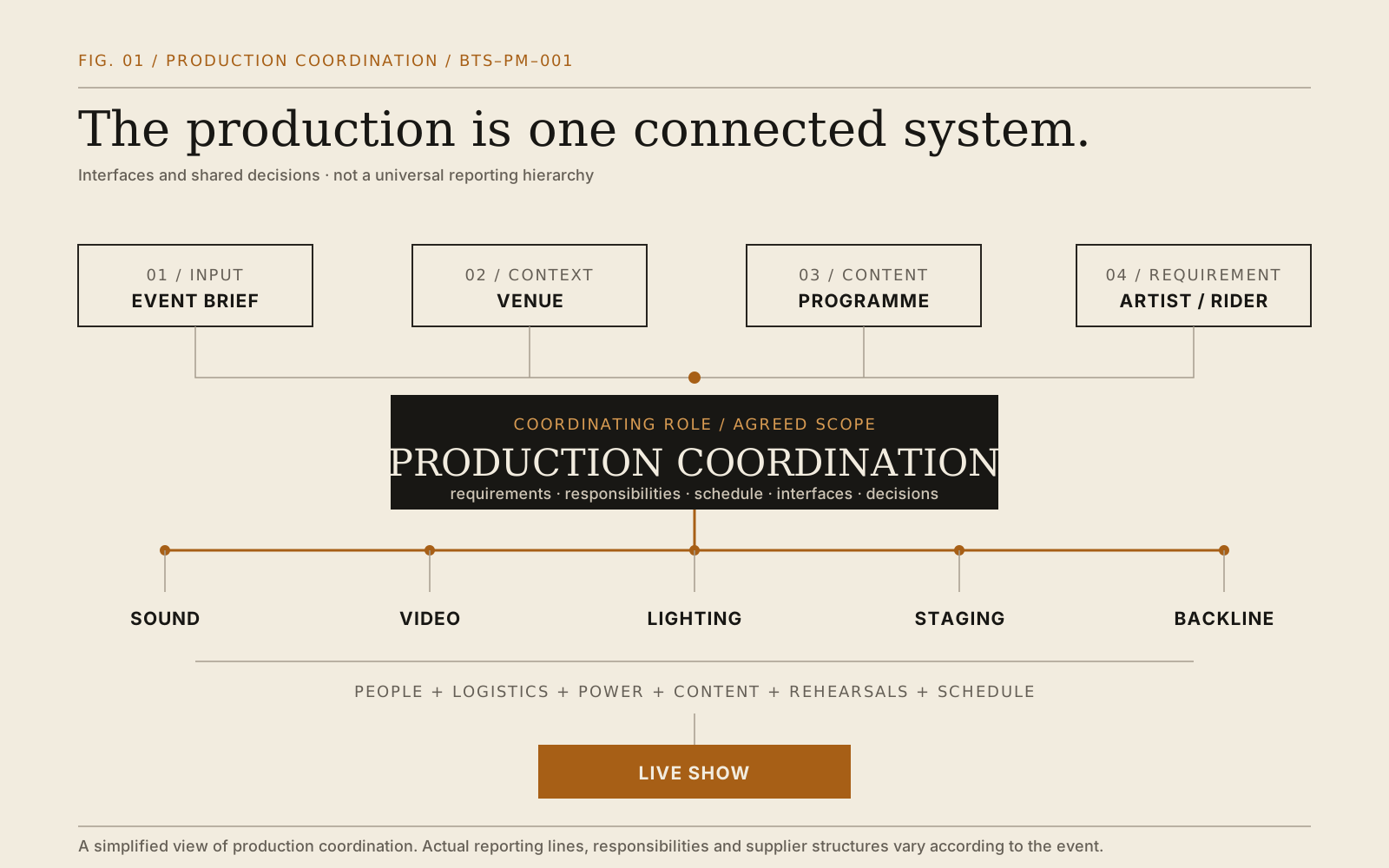
Interface map showing the event brief, venue, programme and artist rider connecting through production coordination to technical disciplines, people and logistics, and the live show.
05Before Suppliers Are Appointed

Define what the production needs to achieve

Before quotations can be meaningful, suppliers need a clear requirement.

Production involvement at this stage may include understanding the event brief, programme and audience; reviewing the venue; identifying the technical disciplines involved; establishing what the client expects suppliers to cover; and finding information that is still missing.

The result is not necessarily a complete technical design. It is a clearer scope from which specialist suppliers can propose appropriate systems and people.

06During Quotation and Planning

Compare scope before price

Two supplier quotations can appear to describe the same event while including different equipment, people, working time, logistics, venue costs, artist requirements and redundancy.

Production review can help identify:

  • what each supplier is actually providing;
  • what is excluded;
  • assumptions that have not been shared;
  • duplicated scope;
  • missing responsibilities;
  • whether the proposed schedule supports the solution;
  • whether artist and venue requirements have been included.

The objective is not to force every supplier into the same design. It is to make sure proposals answer the same production requirement.

07Production Advance

Answer the questions before load-in

Production advance resolves the requirements, responsibilities and logistics that must be understood before equipment and crew reach the venue.

It may connect:

  • venue information and access;
  • artist technical riders;
  • sound, lighting, video, staging and backline suppliers;
  • content and playback deadlines;
  • remote participants;
  • rehearsals and soundchecks;
  • transport, crew and loading;
  • substitutions and approvals;
  • the production schedule.

Questions are usually cheaper to answer before load-in than during it.

08On Site

Keep the production moving as one system

On site, the production plan meets the real venue.

Depending on scope, production management may coordinate access, load-in sequence, supplier activity, technical checks, client walkthroughs, rehearsals, artist soundchecks, programme changes, show readiness, strike and load-out.

Specialist departments remain responsible for their systems. Production management keeps their interfaces, timing and shared requirements visible.

09A useful boundary

When You May Not Need a Separate Production Manager

A separate production-management engagement may add little value when:

  • the event is straightforward;
  • one competent production supplier genuinely owns the complete technical scope;
  • venue requirements are simple;
  • there are no complex artist or remote requirements;
  • the schedule and responsibilities are explicit;
  • the client or agency already has experienced production leadership.
Production management should solve a real coordination need, not become another layer by default.
10Experience

26 Years Behind Live Events

Much of live-production knowledge is learned backstage, during load-ins, soundchecks, changeovers and shows.

I've spent 26 years working around those environments, across production planning, technical requirements, venues, suppliers, artists and show execution.

Behind The Show exists to document that knowledge, explain it clearly and make it useful to the next person who needs it.

11Discuss a Production

Tell me about the production

Share what you are producing, where you are in the planning process and where you think experienced production input may help.

Submitting the form begins a review. It does not confirm availability, scope, pricing or acceptance.

What do you need help with? *
Do you already have a production brief?

A brief is useful, but it is never required before making an enquiry. Build one with the BTS tool.

12Build a Brief Instead

Not ready to discuss professional involvement?

The Event Production Brief Builder helps organise your event, venue, programme, stage activity, presenters, performers, content, schedules and logistics into a structured document you can share with any competent production company.

It does not require an account and does not route the brief to a supplier.

Build Your Event Production Brief