8 min read
EXPLAINER / Production Management
What Does a Production Manager Do at a Live Event?
A Production Manager helps turn an event brief into an executable production by coordinating requirements, responsibilities, suppliers, schedules, venue constraints, people and technical departments. The exact authority and scope vary by event and organisation. The recurring function is to keep the different parts of the production working toward the same show.
On this page ↓
A practical explanation of how a Production Manager coordinates requirements, responsibilities, suppliers, schedules, venue constraints, technical departments and show-day delivery.
A live event can involve several capable specialists and still lack one complete production picture.
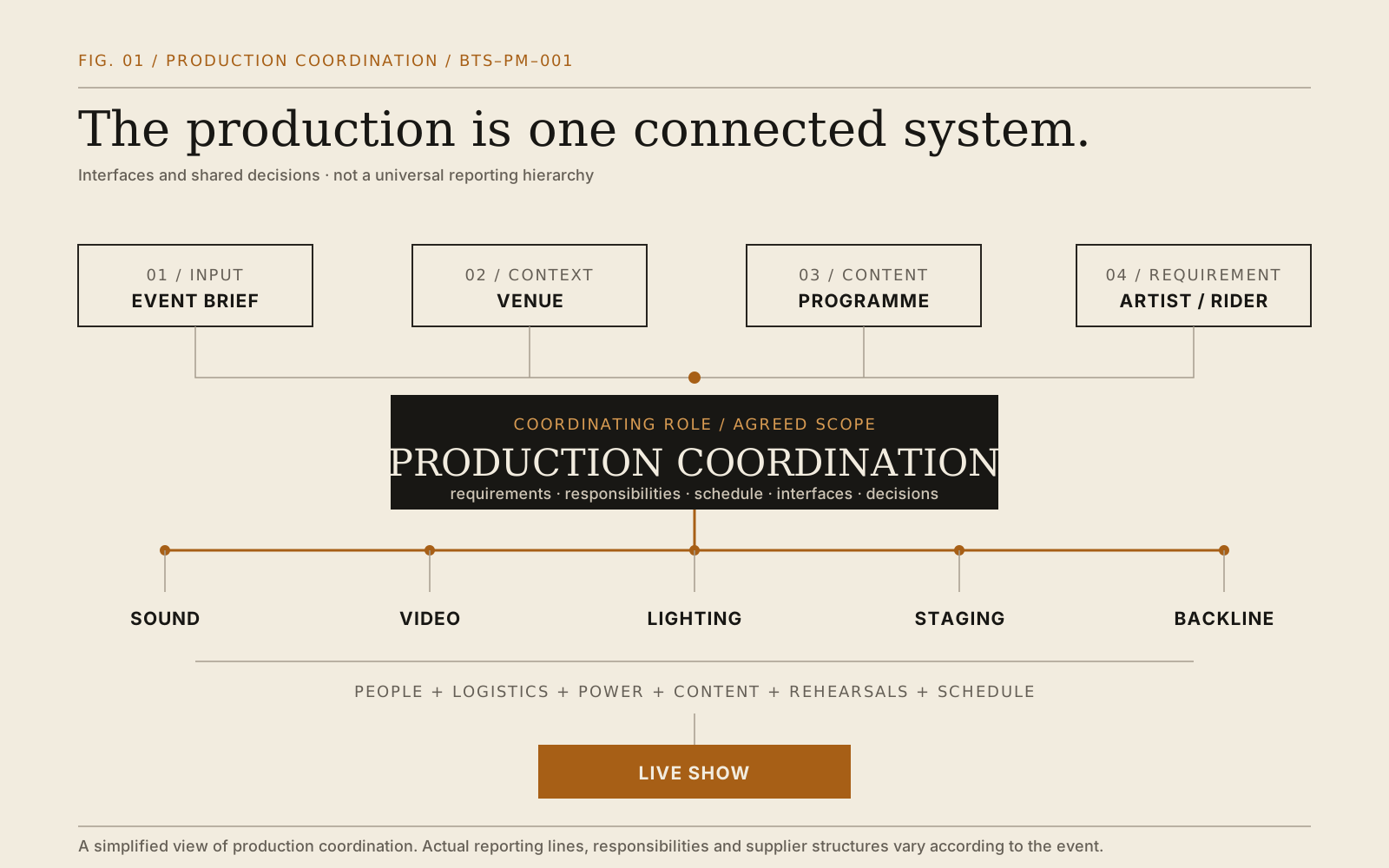
The sound supplier may be responsible for audio. The video team may be responsible for screens, cameras and playback. The lighting team may be responsible for fixtures and control. The venue may control access, rigging and working hours. Artists may arrive with technical riders. The client or agency may control the programme and content.
Each part can be valid on its own while important questions remain unresolved between them.
Without sufficient cross-production coordination, information can remain inside departmental silos, schedule and transition decisions can conflict, suppliers can duplicate scope or make incompatible assumptions, and the audience can experience the result as one disjointed show.
Production management connects those interfaces. It helps turn the event brief into a plan that can be scheduled, supplied, built, tested, operated and removed.
There is no universal Production Manager job description. Titles, authority and responsibilities vary between events, organisations and production structures. The role therefore needs an agreed scope.
The Production Manager Keeps Sight of the Whole Production
Individual suppliers and specialists may own different systems. The audience and performers experience one production.
A Production Manager maintains a wider view of what must happen, who is responsible, what depends on something else and when each part must be ready. That may involve the client, venue, artists, suppliers, technical departments, crew, content, schedule and logistics.
This does not mean that every department reports to the Production Manager, or that the Production Manager has greater specialist authority than the people designing and operating each system.
The useful question is not simply who has the most senior title? It is who is keeping the complete production picture coherent?
Before Suppliers Are Appointed
Early involvement can help turn an event idea or brief into a requirement that suppliers can understand.
The Production Manager may review:
- the purpose and format of the event;
- the programme and audience requirements;
- venue capabilities and restrictions;
- presenters, performers and artist requirements;
- the technical disciplines likely to be involved;
- access, setup, rehearsal and show timings;
- information that is still missing;
- the responsibilities the client expects suppliers to cover.
This stage is less about choosing individual pieces of equipment and more about defining what the production must achieve.
It can clarify whether venue equipment is suitable, what suppliers are being asked to quote, which responsibilities sit between departments and what still needs to be confirmed.
During Production Planning
Once suppliers are involved, production management helps connect their scopes to the same event.
A Production Manager may review what each proposal includes, excludes and assumes. This can reveal gaps, duplicated responsibilities or tasks that sit between departments.
Questions might include:
- Is stage power supplied by the venue or a production supplier?
- Who is providing artist backline?
- Does the video scope include presentation playback and camera feeds?
- Is rehearsal time included in crew calls?
- Who is coordinating wireless frequencies?
- Who maintains the production schedule?
The purpose is not to replace specialist judgment. It is to make sure specialist proposals describe compatible parts of one production.
Production Advance
Production advance is the process of resolving requirements, responsibilities and logistics before the production reaches the venue.
Depending on the agreed scope, a Production Manager may coordinate:
- venue technical information and access;
- supplier deliverables;
- artist technical riders, stage plots and input lists;
- proposed substitutions and approvals;
- production and rehearsal schedules;
- content and playback deadlines;
- crew, transport and loading plans;
- dependencies between departments;
- open questions and decisions.
The advance aims to create a current, shared understanding of what has been agreed and what remains unresolved.
Questions are usually cheaper and calmer to answer before load-in than after equipment and crew have reached the venue.
At the Venue
At the venue, the plan meets physical reality.
Equipment has to arrive in a workable order. Access may be shared. One department may need to complete work before another can begin. A delay at the loading dock can affect a technical check, rehearsal or doors time later in the day.
The Production Manager may coordinate the build sequence, venue interfaces, supplier activity, programme changes and overall readiness.
Specialists remain responsible for their systems and work. Production management helps those systems and people progress as one production rather than as unrelated jobs happening in the same room.
During Rehearsals and Soundcheck
Rehearsals and soundchecks test more than individual equipment.
They test whether performers, presenters, content, cues, communications, technical systems and the programme can work together in the available time.
A Production Manager may coordinate the order of activity, confirm that required people and systems are ready, protect critical rehearsal time and help route changes to the departments affected by them.
The role is not necessarily to direct every specialist decision. It is to keep the wider production aware of what has changed and what that change affects.
During the Show
During the show, technical operation belongs to the engineers, operators, stage team and other specialists assigned to it.
The Production Manager's show-time role depends on the agreed scope. It may include monitoring the wider schedule, coordinating decisions that affect several departments, maintaining the client or venue interface and helping the production respond when programme, timing or operational conditions change.
On some productions, a Show Caller, Stage Manager, Technical Director, producer or supplier lead may carry parts of that responsibility. The title matters less than making the responsibility explicit.
After the Show
Production management may continue through strike, load-out, venue handover and post-event review.
The sequence still matters. Equipment has to be made safe, removed and accounted for. Venue rules and load-out deadlines still apply. Supplier and client handovers may remain open after the audience has left.
Where useful, a post-event review can record what changed, what should be followed up and what could be improved next time.
The production is not complete merely because the show has ended. It is complete when the agreed equipment has been accounted for, the venue and supplier handovers are closed, and any remaining production actions are understood.
Production Manager vs Event Manager
An Event Manager commonly focuses on the wider event experience and delivery. That may include guests, registration, hospitality, venue, programme, stakeholders and many non-technical parts of the event.
A Production Manager commonly focuses on turning the programme and creative or technical requirements into an executable production across suppliers, departments, people, schedule and logistics.
The roles can overlap. Some organisations use the titles differently, and one person may cover both functions. They are useful distinctions, not universal definitions.
Production Manager vs Stage Manager
A Stage Manager commonly focuses on stage activity, performers, cues, changeovers and backstage or show operation.
A Production Manager usually holds a broader view across the venue, suppliers, technical departments, logistics and production schedule.
Their work often connects closely during rehearsals and the show. The exact boundary depends on the production.
Production Manager vs Technical Director
A Technical Director may focus more deeply on technical design, system integration and technical execution.
A Production Manager may focus more broadly on requirements, responsibilities, suppliers, resources, schedule and operational delivery.
On some productions the roles are distinct. On others they overlap or are performed by the same person. Neither title should be used as a substitute for an agreed responsibility list.
When a Separate Production Manager May Not Be Necessary
A dedicated Production Manager is not automatically necessary.
For a straightforward event, a separate engagement may add little when:
- one capable supplier genuinely owns the complete technical scope;
- the venue and access are simple;
- no complex artist, broadcast or remote-participation requirements exist;
- the schedule and responsibilities are clear;
- the client or agency already has experienced production leadership.
The useful question is not simply whether the event is large. It is whether the production has a real coordination need that is not already being met.
Production management should solve that need, not become another layer by default.
The Role Is About Coordination, Not Doing Every Job
A Production Manager does not necessarily mix the sound, operate the lighting, build the stage, tune the video system, run playback or manage the loading dock personally.
Those jobs require the appropriate specialists.
The recurring production-management function is to make requirements, responsibilities, interfaces, dependencies and timing visible enough that the specialists can do their work as part of the same show.
The role is successful when the production behaves like one connected system, even though many different people and organisations may be responsible for its parts.
Related questions
What does a production manager do at a live event?
A Production Manager coordinates the requirements, responsibilities, suppliers, schedules, venue constraints, people and technical departments needed to turn an event brief into an executable production. The exact scope varies by production.
When should a production manager get involved?
A Production Manager can become involved while the event brief, venue or supplier scopes are still being developed, or later when appointed suppliers need coordination. Earlier involvement is most useful when unresolved decisions affect several parts of the production.
Is a production manager the same as an event manager?
Not necessarily. An Event Manager often has a wider event-delivery role, while a Production Manager commonly focuses on the technical and operational production. Titles and responsibilities vary, and the roles may overlap.
What is the difference between a production manager and a stage manager?
A Stage Manager commonly focuses on performers, cues, changeovers and backstage or stage operation. A Production Manager usually coordinates a wider production scope across the venue, suppliers, technical departments, logistics and schedule. The boundary varies by event.
What is the difference between a production manager and a technical director?
A Technical Director may focus more deeply on technical design, integration and execution, while a Production Manager may coordinate the broader requirements, resources, suppliers, schedule and operational delivery. Some productions combine the roles.
Does a production manager manage technical suppliers?
Sometimes, within an agreed scope. A Production Manager may coordinate supplier deliverables, schedules and interfaces without replacing each supplier's specialist authority or contractual responsibilities.
Do all events need a production manager?
No. A straightforward event may not need a separate Production Manager when one capable supplier owns the complete scope or experienced client or agency leadership already provides the required coordination.
Sources & references
- Creative industries production manager — Live Performance Art ProductionSkills England / technical reference
- Creative industries production technician — Live Event Technician (LET)Skills England / technical reference