5 min read
EXPLAINER / Event Production
What Is Live Event Production?
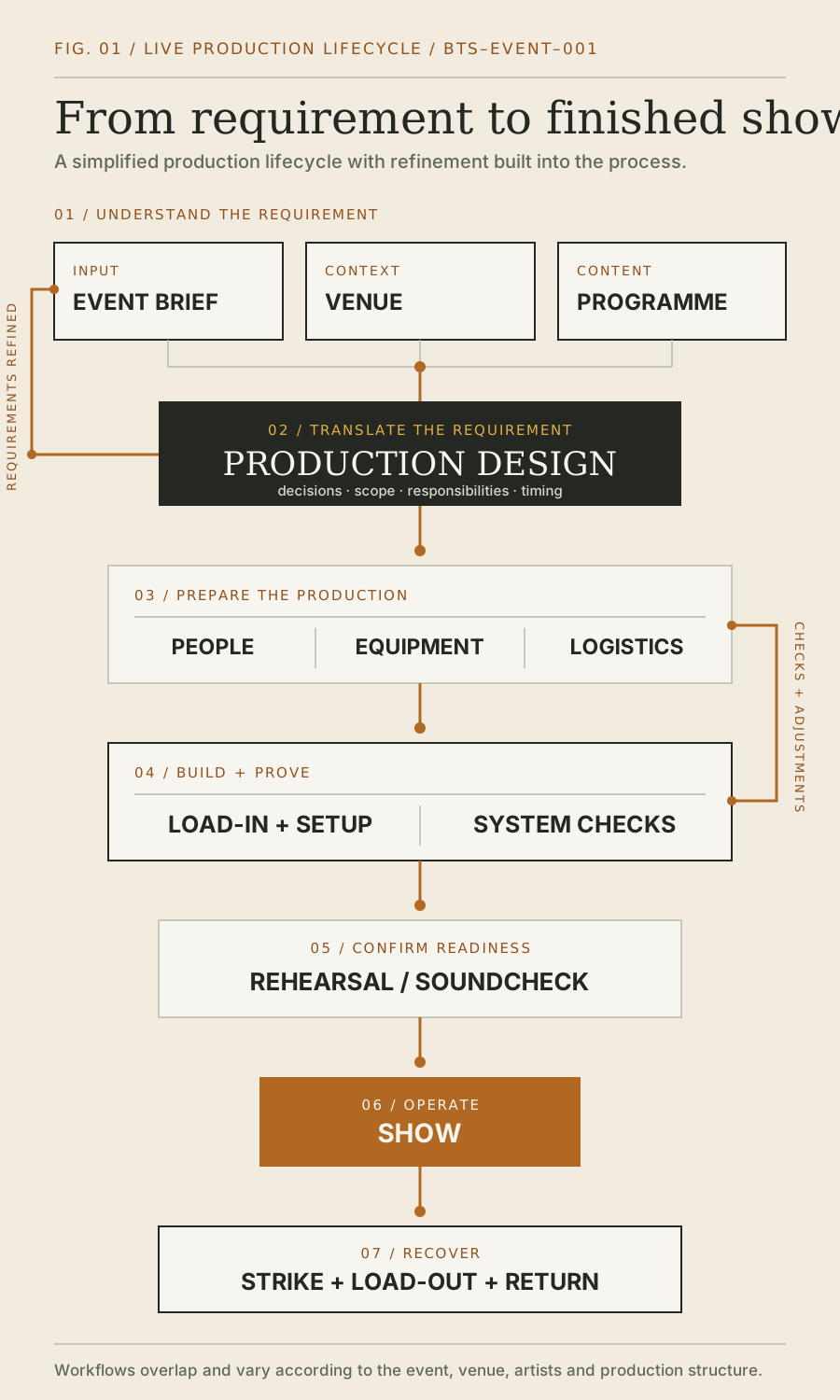
Live event production is the process of turning an event brief into a show that can be built, operated and removed safely and effectively. It connects the programme, venue, artists, technical systems, people, equipment, schedule and logistics so that they function as one production.
On this page ↓
A practical overview of how an event brief becomes a live show through coordinated technical systems, people, equipment, schedules and logistics.
Live event production is the process of turning what an event needs to happen into something that can be built and operated in the real world.
It begins before equipment reaches the venue. The team first has to understand what is happening: who is attending, what the programme contains, who is presenting or performing, what the audience needs to see and hear, what the venue permits, and how much time is available.
Those requirements then become a production plan. Sound, lighting, video, staging, backline, power, communications, crew and logistics are specified and coordinated around the same event.
The show is only one part of that lifecycle. Production also includes advance work, equipment preparation, transport, load-in, setup, system checks, rehearsal or soundcheck, strike, load-out and return.
It Starts With the Event, Not the Equipment
A production cannot be designed well from an equipment list alone.
A conference, awards night, concert and private performance may all use sound, lighting and video. They do not need the same systems, crew or schedule because different things happen during each event.
The useful first questions are therefore operational:
- What is the event trying to achieve?
- Where will it happen?
- How is the audience arranged?
- What happens during the programme?
- Who speaks or performs?
- What content must be shown?
- Are artists or technical riders involved?
- When can the venue be accessed?
- What has the venue already provided?
- Who is responsible for each part of the production?
Once those answers are understood, specialists can determine what equipment and people are appropriate. Planning an Event explains the decisions an organiser should prepare before asking suppliers to design a solution.
The Main Production Disciplines
Depending on the event, live production may connect several technical disciplines.
Sound captures, mixes, monitors and reproduces speech, music and playback.
Lighting makes people and spaces visible and can support the event's creative design.
Video may include screens, projection, LED, presentation playback, cameras, recording and streaming.
Staging provides the physical areas and structures on which the programme happens.
Backline covers the instruments, amplifiers and performance equipment musicians use on stage.
Power supports the electrical systems needed by the production.
Communications connects the production team through intercom, radios and other show-communication systems where required.
These are separate disciplines, but they are not isolated. A stage layout affects lighting positions and camera views. An artist rider may affect sound inputs, backline, power and the soundcheck schedule. A video decision may affect content deadlines, internet requirements and crew.
People Are Part of the System
Equipment does not produce a show by itself.
Depending on the production, the people involved may include producers, production managers, technical directors, designers, engineers, operators, stage managers, technicians, riggers, stagehands, venue teams, warehouse teams and drivers.
Not every event needs every role. What matters is that the responsibilities required by that production are understood and assigned.
A technically capable supplier can still be blocked if nobody knows who is supplying a missing item, approving a change or coordinating access to the venue.
Planning Before the Venue
The work before load-in is often called the production advance.
During that period, the production team reviews the brief, venue information, technical riders, supplier scopes, schedule, access, content, crew and unresolved requirements. The objective is not to remove every possible change. It is to identify questions early enough that they can be answered deliberately.
This is also when assumptions should become explicit. If the venue is supplying the stage, what exactly is included? If an artist is carrying backline, which items are they bringing? If a remote presenter is involved, what must they see and hear?
From Load-In to Show
During load-in, equipment and crew enter the venue and the production is built in a planned sequence.
Systems are then assembled, connected, configured and tested.
The objective is not simply to make each system work independently, but to confirm that the systems, people and programme can work together.
Rehearsals and soundchecks bring presenters and performers into those systems. The team confirms that the programme can happen as intended and resolves remaining operational issues.
During the event, engineers, operators and production teams run the systems and respond to changes in real time. Good production allows the audience to focus on the programme rather than the work behind it.
The Production Continues After the Audience Leaves
Strike and load-out dismantle the production and move it out of the venue. Rental equipment then returns to inventory, where it may require counting, inspection, testing, cleaning, charging, repair or quarantine before it is ready for another show.
That final step matters. The lifecycle does not end because a case has left the building. It ends when the equipment, information and responsibilities from the production have been accounted for.
Live Production Is a Connected Process
The exact workflow changes with the event, venue and production structure.
Related questions
What is live event production?
Live event production is the process of turning an event brief into a show by coordinating the programme, venue, artists, technical systems, people, equipment, schedule and logistics.
What happens before a live show?
The production team reviews the brief, venue, programme, artist requirements, supplier scopes, responsibilities, access and schedule before equipment is prepared, transported, installed, tested and rehearsed.
What systems are involved in live event production?
Depending on the event, production may involve sound, lighting, video, staging, backline, power and communications, together with the people, logistics and coordination required to make those systems work together.
Who is involved in producing a live event?
The team may include producers, production managers, technical directors, designers, engineers, operators, stage managers, technicians, riggers, stagehands, venue teams, warehouse teams and drivers. The exact roles depend on the production.
When does live event production begin and end?
It begins when the event requirement is understood and planned. It ends after the show has been dismantled and the equipment, information and outstanding responsibilities have been accounted for.
Sources & references
- Creative industries production technician — Live Event Technician (LET)Skills England / technical reference