4 min read
EXPLAINER / Live Sound
What Is Signal Flow?
Signal flow is the path an audio signal takes from its source through the connections, controls and routing that carry it to a destination. In live sound, following that path helps explain how one input can reach the audience, performers or a recording system, and where to look when an intended destination is missing audio.
On this page
A microphone can be audible to the audience while another required destination receives nothing. Following the route explains how those outcomes can coexist.
Follow one voice through the system
Imagine a presenter speaking into a microphone. The audience needs to hear that voice. A recording may need it too. If a remote participant is joining the discussion, they may need their own feed.
Those requirements share a source, but they need not share the same output. To understand the system, follow the voice from the point where it enters to each place it needs to arrive.
That journey is its signal flow.
Start with a source and a destination
A useful first question is specific: where should this audio go?
For a microphone, the source is captured sound. For playback, it may be an audio output from a device. A suitable connection brings the signal into the sound system. The input list identifies the sources the team expects, while the actual patch establishes how they enter the system.
An input number on a document does not necessarily identify a physical socket. The team needs to understand the mapping between the source, connection and console channel.
A simplified worked path
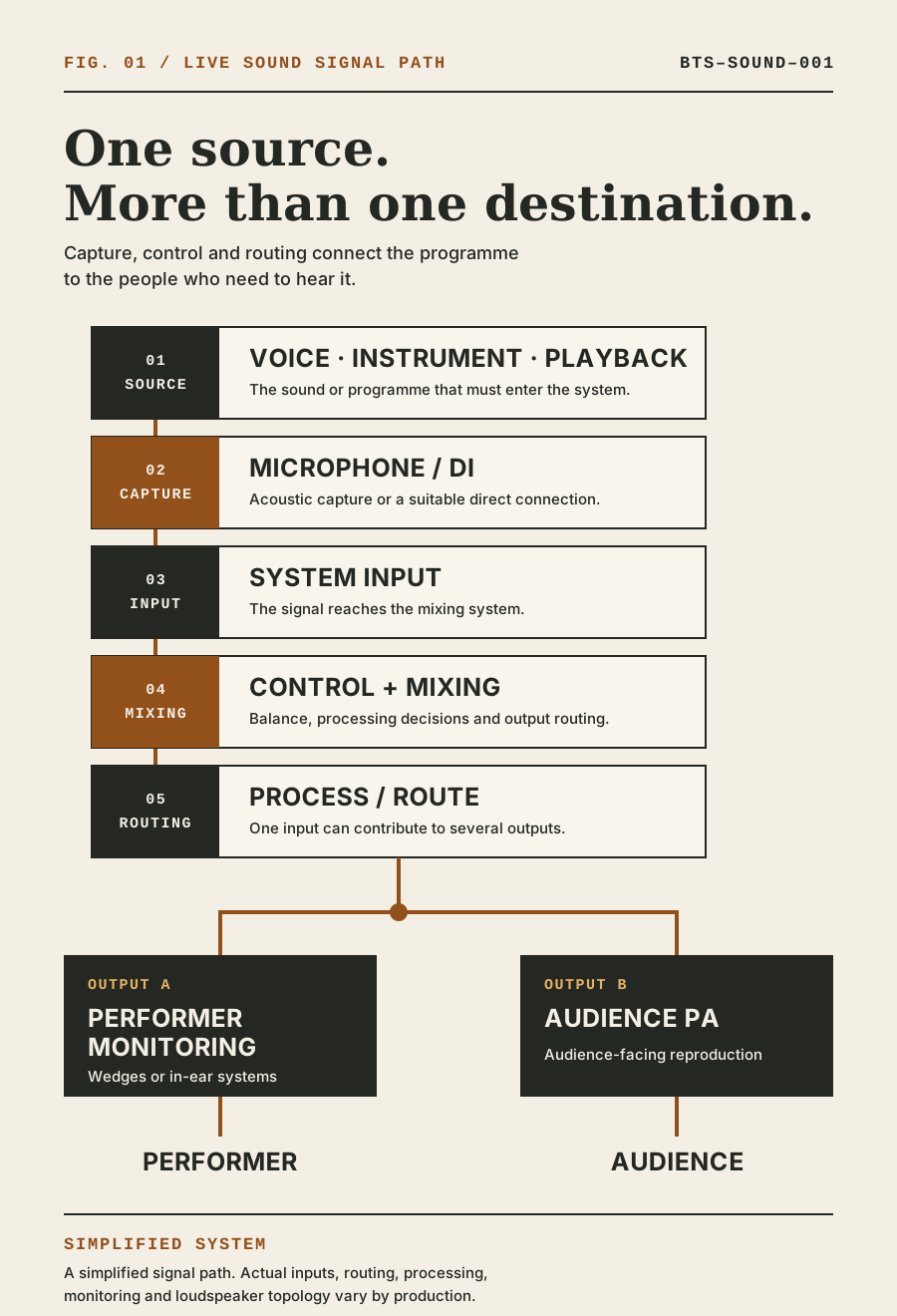
For the presenter's audience feed, an example path is:
- Microphone receives the presenter's voice.
- The stage connection carries its signal to the mixing system.
- An input channel provides control over that source.
- Routing sends the channel to the intended audience mix.
- The output reaches the PA system, including the processing and amplification required by that system.
- Loudspeakers reproduce the programme for listeners.
This is a simplified example, not a wiring specification. Equipment, connection methods, processing order and available controls vary. Some stages sit inside one device; others are distributed across several devices or locations.
Where the path branches
A mixer can route an input into more than one mix. An auxiliary send can contribute it to another bus, which combines the selected signals for a destination. This allows an audience mix and a performer mix to have different balances.
For example, the presenter may be audible in the audience PA while a performer needs a different balance in their monitoring. A recording feed introduces another destination to confirm. Hearing audio in one place does not establish that every required output receives it.
The branch matters because a control may affect one path without affecting another. A pre-fader send takes its feed before the channel fader; a post-fader send takes it after. Their behaviour differs. The actual console and configuration determine which controls affect a particular destination.
Processing is part of the route
Audio may pass through processing before continuing to its destination. An insert places processing within a signal path. A send-and-return arrangement sends audio to processing and returns the result to a mix.
You do not need to learn every processing option to understand the principle. Identify where a stage sits in the route and which signal it receives. Its position helps explain what changing it will affect.
When one destination is silent
Suppose the presenter is audible in the PA, but absent from the recording. That observation narrows the investigation: the source reaches at least one destination, but the recording path still needs checking.
The responsible audio team can follow that path deliberately: the intended channel, its assignment or send, the receiving bus, the output and the recorder's input. A meter showing signal at one point is evidence about that point, not proof of successful reproduction at the end.
This is a way of asking better questions, not a substitute for the engineer's system knowledge. Avoid making unrelated level or routing changes simply because something is silent. Unexpectedly restoring a feed can produce unwanted sound; checks should be coordinated with the people operating the system.
Use the model during preparation
An input list helps identify sources. A line check helps verify the expected inputs and connections. Soundcheck considers how the system works with the performers and programme.
Signal flow gives those activities a common reference: what enters, how it is controlled and where it goes. If your next question is how the complete production captures, mixes and reproduces sound, continue with What Is Live Sound?.
Related questions
What is signal flow in live sound?
The route audio takes from a source through connections, control and routing to its required destinations.
Can one audio input feed more than one output?
Yes. Routing can send an input into separate mixes or destinations, subject to the system's capabilities and configuration.
What is an audio bus?
A path that combines selected signals for a mix or destination. Its purpose depends on the system and how it is configured.
What is the difference between a pre-fader and post-fader send?
A pre-fader send takes its signal before the channel fader; a post-fader send takes it after. Verify the actual console configuration rather than assuming how other controls affect either path.
Why can audio reach the PA but not the recording?
The destinations may use different routing or outputs. The recording path needs its own checks even when the audience feed works.
Sources & references
- Aux Sends and ReturnsYamaha / manufacturer / 20 Jul 2018
- How to Use InsertsYamaha / manufacturer / 28 Dec 2022