10 min read
EXPLAINER / Event Production
What Is Production Advance?
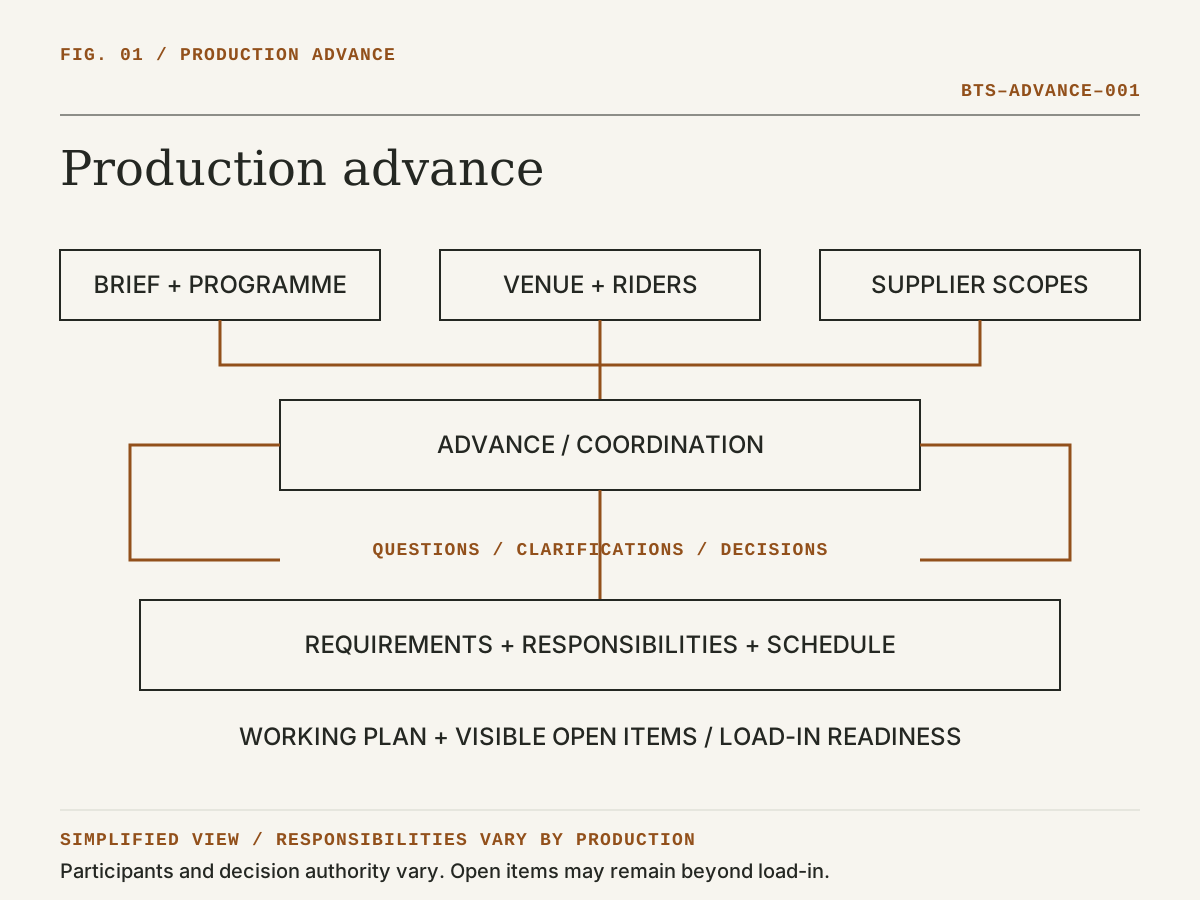
Production advance is the process of reviewing a live event's current requirements before the show and turning them into a shared, workable production plan. It connects the programme, venue, technical riders, suppliers, schedules, responsibilities, decisions and unresolved questions so the people delivering the event understand what is required before load-in begins.
On this page ↓
Production advance is the process of reviewing a live event's current requirements before the show and turning them into a shared, workable production plan. It connects the programme, venue, technical riders, suppliers, schedules, responsibilities, decisions and unresolved questions so the people delivering the event understand what is required before load-in begins.
In Brief
Production advance is the work of turning event information into an agreed production state before equipment and crew reach the venue.
It begins with the current requirement: the event brief, programme, venue information, technical riders, supplier scopes, schedules and decisions already made. The people responsible for delivering the production review that information, identify contradictions and gaps, clarify who owns each part of the work, agree changes and record what remains unresolved.
The result is not a promise that nothing will change. It is a current shared understanding of what the production is preparing to deliver.
The purpose of an advance is not to eliminate every possible change. It is to make the known requirements, responsibilities, decisions and unresolved questions visible before they become onsite problems.
Production Advance Happens Before the Show
The advance takes place during pre-production, before load-in and show delivery.
It should begin early enough for important information to affect the production rather than arrive after equipment, crew or schedules are already committed. The useful starting point varies. A straightforward event may need a short coordination period. A multi-day event, touring artist, difficult venue or production involving several technical suppliers may require a longer and more detailed advance.
Production advance does not necessarily begin only after every supplier has been appointed. Early advance work can expose the scope that still needs to be quoted or assigned. Once suppliers are appointed, the process becomes more specific because proposed systems, people, transport, access and working times can be coordinated against the actual event.
Start With the Current Requirement
Advance work should begin with the latest available information, not with assumptions carried over from a previous event or an outdated document.
That information may include:
- the event or production brief;
- the current programme or running order;
- venue and exact event-space information;
- audience and room layout;
- stage activity and maximum occupancy;
- presentations, playback, cameras, recording or streaming;
- remote participants;
- artist technical riders, stage plots and input lists;
- supplier quotations and scope documents;
- venue rules and existing provision;
- access, setup, rehearsal, show and load-out timings;
- decisions, approvals and open questions already recorded.
Not every production begins with a complete package. The advance is partly how the team discovers what is missing. Missing information should become a named question with an owner and a required decision point, not an invitation to guess.
Who Takes Part in a Production Advance?
The participants depend on the event and on how responsibility has been organised.
They may include the client or agency, producer, Production Manager, venue team, technical director, stage manager, artist or touring representatives, content team and the suppliers responsible for sound, lighting, video, staging, backline, power, communications, transport or other agreed areas.
Not everyone needs to attend every conversation. A useful advance gets the relevant information to the people who can review it, make or obtain decisions, and deliver the resulting requirement.
A Production Manager may coordinate the process, but a separate Production Manager is not the only way to provide cross-production coordination. The responsibility may sit elsewhere on a simpler production or within an experienced lead supplier, venue, client or agency team.
Review the Programme
The programme explains what the production has to support.
Reviewing it should reveal more than start and finish times. The team needs to understand what happens during each part of the event, who is involved, what changes on stage, what content is used and how one activity transitions into the next.
A keynote, panel, awards sequence, product reveal and live performance can require different stage layouts, people, inputs, playback, lighting states, camera coverage and rehearsal time. If several activities follow one another, the transition between them may be as important as the individual segments.
Programme changes should be considered across departments. Moving a performance earlier may affect artist arrival, backline preparation, soundcheck, content, lighting and stage access rather than only the running order.
Review the Venue
The production has to work in a real place with real constraints.
Advance review may include:
- the exact event space and any additional rooms;
- room and stage dimensions where known;
- audience layout and sightlines;
- installed sound, lighting, video or staging provision;
- loading points, access routes, lifts and storage;
- available setup and load-out windows;
- power and connectivity information;
- rigging, structural and venue approval requirements;
- working-hour, noise, floor-protection or access restrictions;
- venue-appointed or exclusive suppliers;
- the venue contacts responsible for technical and operational decisions.
The objective is not to make the client perform a technical survey. It is to identify what is known, what must be verified and who is responsible for obtaining specialist information or approval.
Where structural, electrical, rigging, fire, life-safety or statutory decisions require qualified specialists or venue authorities, production advance coordinates those interfaces; it does not replace their professional authority.
Review Technical Riders
A technical rider is one input to the advance, not the final production plan.
The current rider should be reviewed against the actual event, venue, stage, schedule, suppliers and available equipment. Stage plots and input lists should be consistent with the written requirements, and the team should identify what travels with the artist and what must be provided locally.
Requested equipment may be essential, preferential or open to an approved equivalent. The distinction should be clarified rather than assumed. Proposed substitutions, revised quantities, local provision and changes to artist-carried equipment should be agreed with the appropriate representative and reflected in the working production information.
The deeper item-by-item process for Backline is covered in How to Read Backline Requirements in a Technical Rider. This Article remains focused on the wider coordination process.
Define Supplier Scope and Responsibilities
Several capable suppliers can still leave a production gap if each assumes another party owns the same requirement.
The advance should make supplier scope explicit. For each relevant area, establish:
- what is required;
- what is included;
- what is excluded;
- what is already being provided;
- who supplies, installs, operates and removes it;
- who approves changes;
- what information another department depends on;
- what remains unassigned.
This matters at the edges between disciplines. A video playback requirement may depend on client-supplied content, the sound team may need programme audio from video, the stage layout may affect lighting and camera positions, and an artist changeover may need coordinated work from stage, backline and audio teams.
Responsibility should be explicit enough that the requirement does not disappear between scopes.
Resolve Interfaces Between Departments
Production departments do not operate as isolated systems.
Advance work should identify where one decision affects another part of the production. Examples include:
- stage dimensions affecting performers, furniture, lighting and camera framing;
- artist requirements affecting sound inputs, backline, power and soundcheck time;
- screen positions affecting stage layout, rigging and audience sightlines;
- remote participation affecting audio, video, connectivity, content and testing;
- registration affecting space, power, internet, furniture, signage and staffing;
- venue access affecting transport, crew calls, build order and load-out planning.
The purpose is not to make one person design every specialist system. It is to ensure that specialist decisions describe compatible parts of the same production.
Build the Working Schedule
Time is a production constraint.
The advance should connect venue access, loading, build sequence, system checks, content testing, rehearsal, soundcheck, doors, show operation, strike and load-out. It should also identify dependencies: a rehearsal cannot begin on the intended stage if the build or safety checks are not complete, and content cannot be fully tested if the final files have not arrived.
The schedule should be tested against the actual scope rather than copied from a preferred show time backwards. If the available window is too short for the proposed work, the team may need to change the sequence, resources, scope or venue arrangement.
Production advance should expose that conflict while alternatives can still be considered.
Identify What Is Still Unknown
An advance does not become successful only when every field says confirmed.
Some information may remain unresolved because a final programme, artist rider, venue specification, content file, approval or participant detail is still pending. The useful response is to record:
- what is unknown;
- why it matters;
- who is expected to resolve it;
- which production decision depends on it;
- when the answer is needed;
- what temporary assumption or allowance, if any, has been agreed.
Known, to be confirmed, not applicable and responsibility not yet assigned are materially different states. Keeping those states visible is safer and more useful than presenting an incomplete plan as final.
Record Decisions and Approved Changes
Production information changes as questions are answered.
The current working record should show agreed decisions, approved alternatives, responsibility changes and revised versions of relevant documents. Teams should be able to identify which rider, programme, stage plot, input list, schedule or supplier scope they are preparing from.
This does not require a complicated platform. The method may be a shared document, marked-up rider, action list, schedule, responsibility matrix, email record or production-management system. What matters is that the current decision can be found and that superseded information is not mistaken for the approved plan.
Verbal decisions that affect several teams should be reflected in the shared production information.
What Should Be Ready Before Load-In?
The level of detail varies, but before load-in the production should have a usable answer—or a visible, owned question—for the matters that affect preparation and onsite work.
That normally means the team understands:
- what the event and programme require;
- which venue spaces and access arrangements apply;
- what each supplier and stakeholder is responsible for;
- which technical and artist requirements are confirmed;
- which substitutions or changes have been approved;
- how equipment, crew and content reach readiness;
- the working setup, rehearsal, show and load-out schedule;
- the important dependencies and remaining open items;
- who can make or obtain decisions if something changes.
Load-in is not the right time to discover avoidable contradictions between the brief, venue, rider, supplier scopes and schedule.
Does Production Advance End Before Show Day?
Most advance work happens before load-in, but the working production state continues to be tested as the event approaches.
A revised programme, delayed content file, venue change, artist update or unavailable item may require part of the production to be advanced again. The relevant people should review the change, understand its consequences, agree the response and update the current information.
Once the production is onsite, coordination moves from preparation into execution. Open items do not disappear at that point, but they should arrive with clear context, ownership and a way to make the remaining decision.
Production Advance Is a Process, Not a Meeting
A production meeting can be useful, but it is only one mechanism within the advance.
Advance work may happen through document review, supplier calls, venue visits, marked-up riders, design reviews, schedules, approval emails, technical tests and smaller conversations between the people responsible for specific interfaces.
One meeting does not complete the process if questions remain unowned, decisions are not recorded or changed information never reaches the people preparing the show.
Production advance is complete enough to move forward when the current requirements, responsibilities, decisions and open questions form a workable basis for preparation and load-in—not simply when the meeting ends.
Key Takeaway
Advance the production until the people preparing it share the same current understanding of what is required, who owns it and what remains unresolved.
Related questions
What is production advance?
Production advance is the pre-show process of reviewing current requirements, responsibilities, suppliers, venue information, schedules, decisions and open questions so the production can be prepared from a shared working plan.
When should production advance begin?
It should begin early enough for unresolved information to affect scope, supplier preparation, equipment, people and schedules before those decisions become difficult to change. The appropriate lead time depends on the production.
Who is involved in production advance?
The relevant client, agency, venue, artist and supplier representatives take part according to the production. A Production Manager may coordinate the process, but the responsibility can sit elsewhere where the production structure provides sufficient coordination.
What information is reviewed during production advance?
The team may review the brief, programme, venue, technical riders, stage plots, input lists, supplier scopes, content, access, schedules, responsibilities, approvals and unresolved requirements relevant to the event.
Is production advance the same as a production meeting?
No. A meeting may support the advance, but the advance is the wider process of reviewing documents, clarifying requirements, coordinating interfaces, recording decisions and maintaining current production information.
What should be resolved before load-in?
Requirements affecting preparation and onsite work should be confirmed or recorded as visible, owned open items. Supplier scope, venue access, responsibilities, current documents, approved changes, schedule and critical dependencies should be understood.
Does production advance continue after suppliers are appointed?
Yes. Appointment makes supplier scope and proposed delivery more specific, but the production still needs coordination with the programme, venue, artists, other suppliers, schedule and later changes.
What happens if information is still missing after the advance?
Keep it visible as an open item with an owner, dependency and decision point. Where appropriate, record an agreed temporary assumption or allowance rather than presenting the information as confirmed.
Sources & references
- Tech Specs and Stage PlotsMusicians' Union / technical reference